
1. Define the operating model
Decide whether you will own and operate machines, sell or lease hardware, share revenue with venues, provide managed service, or combine those roles. The contracts, permits, insurance, payment accounts, product ownership, and operational responsibilities depend on this structure.
2. Screen the market and venue type
For age-restricted self-service products, start with locations that actually enforce 21+ access at all times. Do not build a plan around a mixed-age venue and assume a scanner fixes the problem. Evaluate traffic only after the access model passes review.
3. Verify law, permits, and product eligibility
Check federal rules, FDA product status, state statutes and agency guidance, local ordinances, retailer permits, sales tax, warning signs, advertising, privacy, and any shipping or delivery obligations. Verify the exact address and each intended SKU. Use qualified counsel when the model or contracts are unclear.
4. Build unit economics with visible assumptions
Estimate daily transactions, average sale, product cost, card fees, venue share, fixed costs, tax treatment, replenishment labor, software, spoilage or shrinkage, refunds, and downtime. Then calculate monthly net cash flow and payback against the complete setup cost.
Start with the current machine-cost worksheet, then run a transparent scenario and keep the output labeled as an estimate.
5. Qualify the actual location
Measure width, height, depth, wall condition, floor level, service clearance, doorways, stairs, loading access, power, signal, cameras, lighting, customer flow, weather exposure, and emergency egress. Photograph the planned spot and delivery path.
6. Choose the machine and configuration
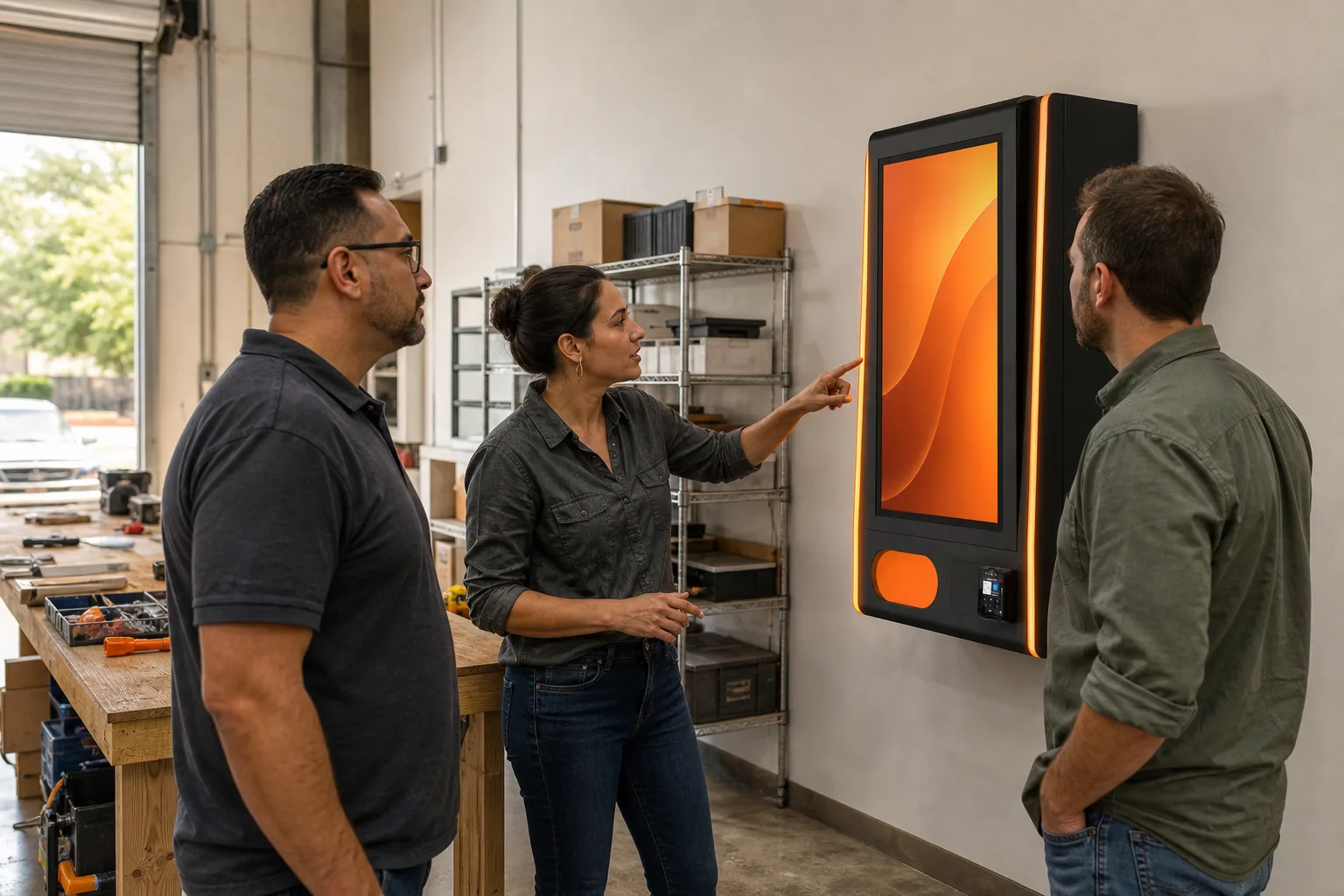
Match cabinet format to the site and refill plan. Compare row count, capacity range, screen, mounting, lead time, and weight. Choose payment and eligible age-verification options only after confirming model compatibility and the operating procedure.
Compare all nine VapeVendy machines.
7. Validate every product package
Record package width, height, depth, weight, shape, and material. Test dispensing in the final coil or shelf setup. Independently verify that every product can lawfully be marketed and sold in the jurisdiction; competitor listings are not proof of legality.
8. Document the venue agreement
Cover term, placement, access control, electricity, connectivity, revenue share or rent, payment settlement, product ownership, permits, warnings, service access, damage, insurance, privacy, refunds, removal, termination, and what happens if law or venue policy changes.
9. Install and test against a launch checklist
Verify anchoring, level, power, signal, payment, ID workflow, every selection, refund procedure, remote dashboard, planogram, price, warnings, cleaning, keys, service contacts, and incident escalation. Capture serial numbers and final photos.
10. Review the first 30 days from actual data
Track transactions, revenue, gross margin, net cash flow, stockouts, failed vends, refunds, route time, service calls, and product sell-through. Adjust the planogram and refill rhythm from observed demand. Do not scale from a gross-sales screenshot.
Expansion rule: prove one repeatable location with documented economics and operations before multiplying the route.